GTA_Cyber Dawg 2.jpg
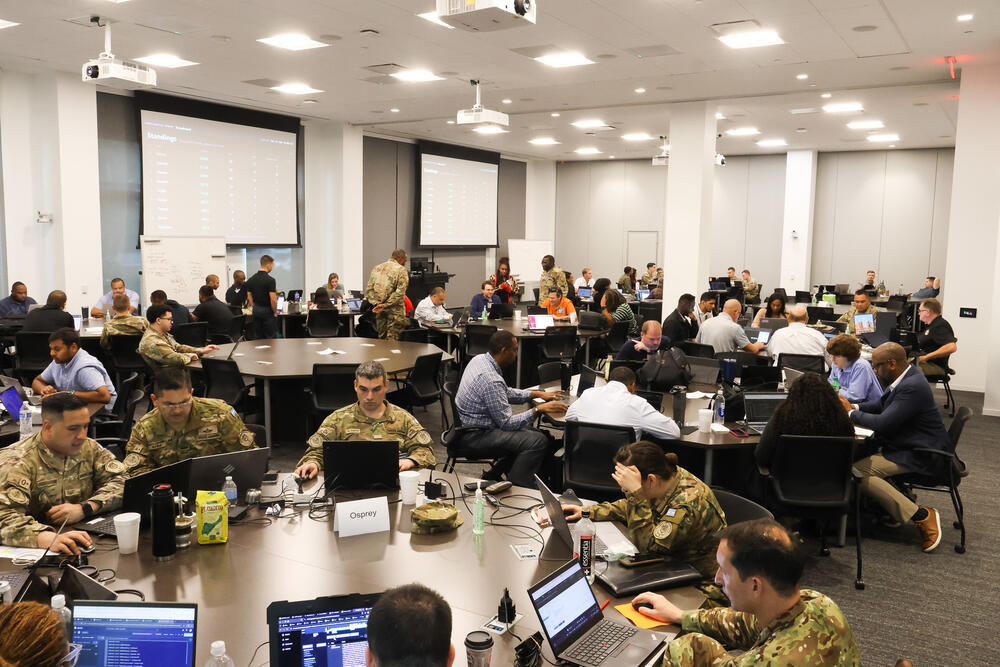
Caption
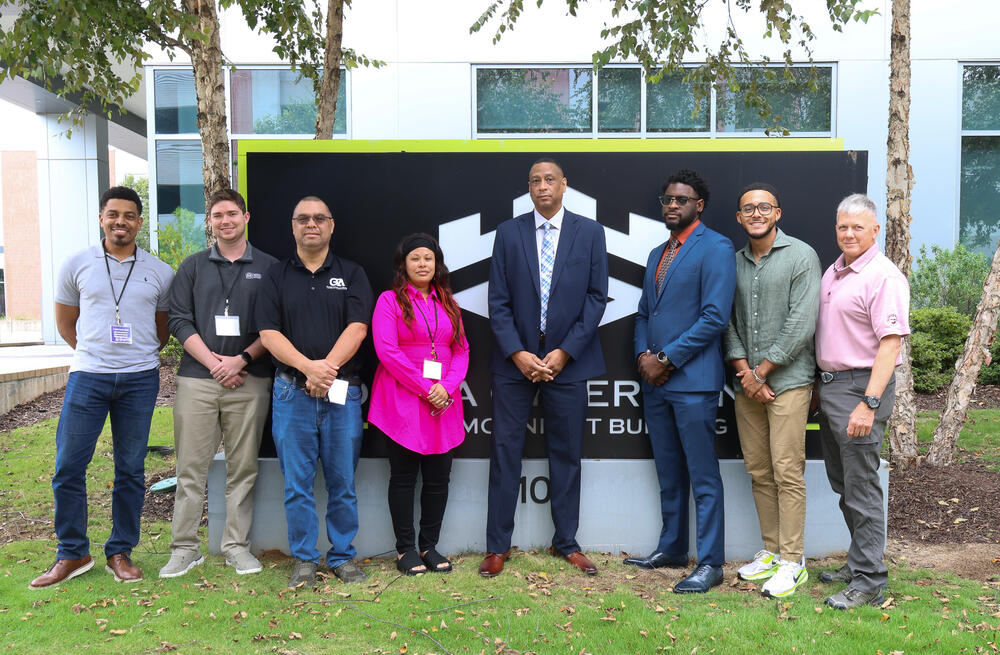
Cyber Dawg 2026 participants gather for a live-fire exercise, putting their cybersecurity skills and teamwork to the test in realistic threat scenarios. An official website of the State of Georgia.
The .gov means it’s official.
Local, state, and federal government websites often end in .gov. State of Georgia government websites and email systems use “georgia.gov” or “ga.gov” at the end of the address. Before sharing sensitive or personal information, make sure you’re on an official state website.
Still not sure?
Call 1-800-GEORGIA to verify that a website is an official website of the State of Georgia.
October 05, 2026
When a cyber incident happens, technology is only part of the response. The people who know how to work together, share information quickly, and make decisions under pressure can make the difference between disruption and recovery.
That is why partnership remains at the pinnacle of safeguarding Georgia, its technology environment, and the government services people depend on every day.
In September, the Georgia Technology Authority’s Office of Information Security (OIS), alongside the Georgia Department of Defense and partners across government, military, and industry brought that philosophy to life during Cyber Dawg 2026, Georgia’s premier live-fire cybersecurity exercise. Held September 21 through 25 at the Georgia Cyber Innovation and Training Center in Augusta, the week placed cybersecurity professionals inside realistic scenarios designed to test more than technical knowledge. It tested communication, coordination, and the ability to respond together when the stakes are high.
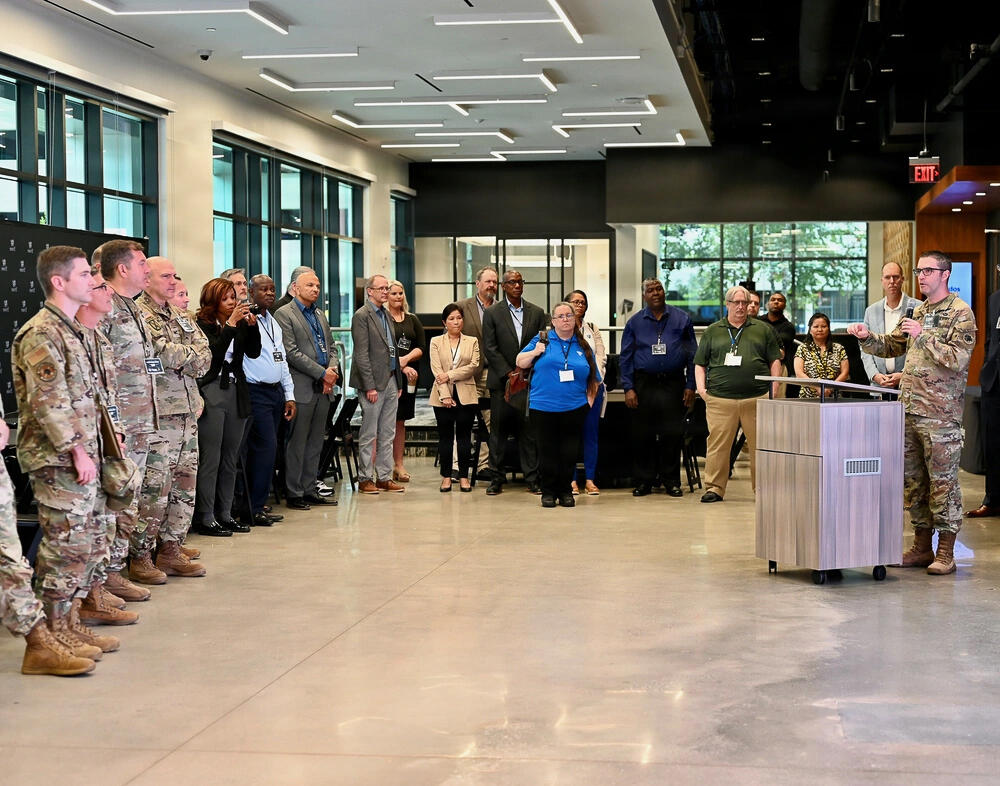
Cyber Dawg began in 2019 as a small exercise between the Georgia Army National Guard Cyber Protection Team and GTA OIS. What started with teams working from portable incident-response equipment has steadily grown into a sophisticated, multi-agency exercise supported by the Georgia Cyber Center’s Cyber Range.
That growth tells an important story.
By 2024, Cyber Dawg brought together 105 cybersecurity professionals representing 17 state and county government organizations. In 2025, participation increased to a record 129 participants from 33 organizations, a 23 percent increase from the previous year. Nearly two-thirds of the defensive team members that year were first-time participants, expanding the number of professionals across Georgia with hands-on experience responding to sophisticated cyber threats.
In 2026, the exercise continued to broaden that network, bringing together professionals from more than 20 state agencies, local government, the Army and Air National Guard, additional domestic and international military partners, as well as private-sector experts.
Cyber Dawg has become more than an annual training event. It is helping build a community of defenders who already understand how to work together before a real incident occurs.
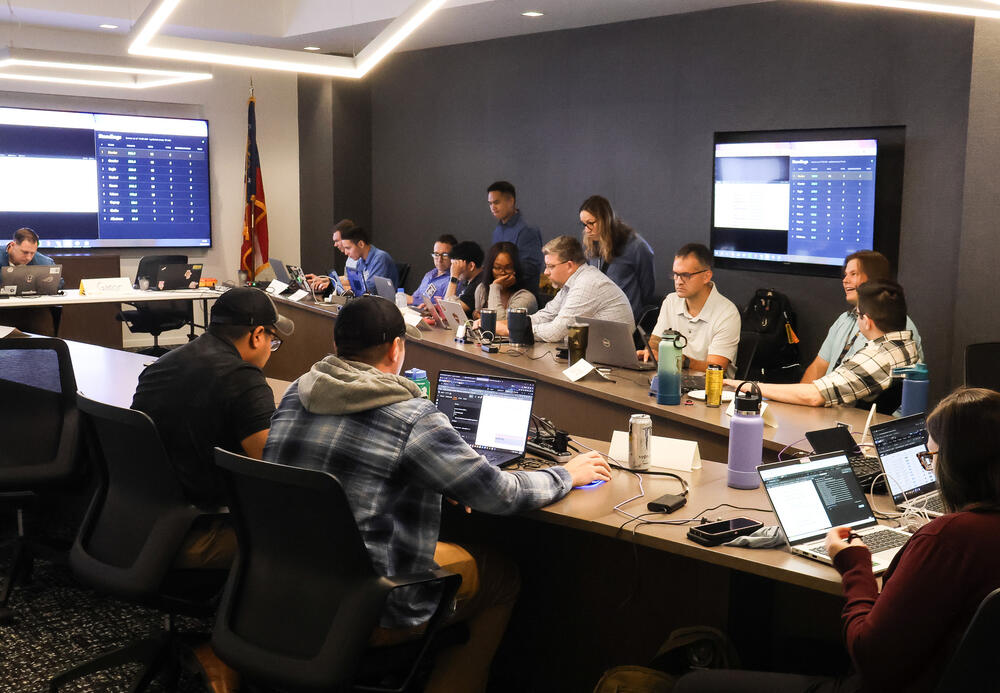
During Cyber Dawg 2026, participants worked inside a controlled cyber range where realistic threats unfolded in real time.
Teams practiced incident detection and analysis, threat hunting, log analysis, alert validation, intelligence sharing and coordinated incident response. The environment incorporated real-world internet traffic and sophisticated attack scenarios, allowing participants to experience the pressure and uncertainty that can accompany an actual cybersecurity event without placing operational government systems at risk.
The 2026 scenario also extended into critical infrastructure. An international account of the exercise described an environment that simulated electrical infrastructure connected to an airport system, with attacks evolving as participants responded. Multinational defensive teams worked across both leadership and technical analysis roles, further testing how organizations coordinate across boundaries.
Participants also used technologies such as CrowdStrike and Splunk to monitor activity, investigate threats, and analyze data as incidents developed. This exposure to the tools, data, and workflows used in operational environments helps bridge the gap between classroom knowledge and real-world response.
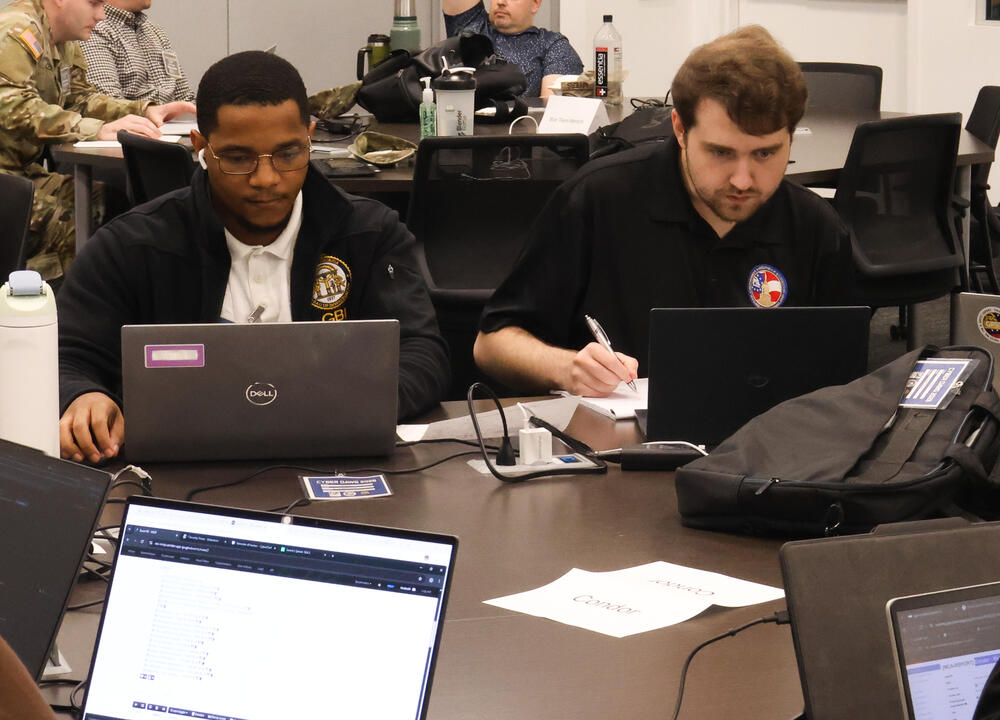
Technology changes quickly and trusted relationships take time to build.
Cyber Dawg creates space for both.
Throughout the week, state cybersecurity professionals worked alongside military cyber teams, industry experts and international partners. Georgia also continued its collaboration with representatives from the Republic of Georgia and Argentina through the Georgia National Guard’s State Partnership Program, creating opportunities to compare procedures, exchange lessons learned and strengthen interoperability.
As GTA Deputy Chief Information Security Officer Alex Kirkland noted during the exercise, Cyber Dawg helps increase cyber awareness, strengthen relationships with the Georgia National Guard, give employees meaningful hands-on training and improve the sharing of cyber intelligence across those partnerships.
That connection matters when an incident moves beyond one organization.
Responding effectively may require multiple agencies, technical teams, military partners and other experts to quickly develop a shared understanding of what is happening and what action needs to follow. Cyber Dawg allows those teams to practice that coordination before it is needed for real.
Cyber Dawg's impact doesn't end when participants leave Augusta.
Lessons learned return with them to agencies across Georgia. Participants gain experience identifying suspicious activity, evaluating alerts, communicating findings, escalating incidents, and making decisions while an attack unfolds.
Previous exercises have already demonstrated measurable improvement in areas such as incident validation, log analysis, and intelligence sharing. Cyber Dawg also expands Georgia’s cyber workforce by giving newer defenders experience that can be difficult to replicate through traditional training alone.
Those capabilities directly support GTA OIS’s broader mission to enhance security across state networks, develop a cyber-ready workforce and build enduring partnerships.
Ultimately, cyber readiness is about maintaining trust and resilience. Secure systems help agencies continue delivering services, protect government information and recover more effectively when disruptions occur.
Cyber Dawg strengthens that readiness one scenario, one defender and one partnership at a time.
What began in 2019 as a small collaborative exercise has evolved into a statewide model for preparing together. As cyber threats continue to change, that foundation of shared experience may be one of Georgia’s strongest defenses.